

Finding Nemo
Sovereignty, Inherited Fear, and the Cost of Protection
Welcome to Kingdom Codes, a series where I explore how modern stories reveal ancient truths. Disney may not call it cosmology, but the patterns are there. Consider this your onboarding into a deeper conversation about identity, calling, and sovereignty.
There are stories people watch for comfort, the way you turn on a familiar song when the day has already asked too much of you, and then there are stories that sit you down, quietly, and start telling the truth about how you live.
Finding Nemo belongs to the second category.
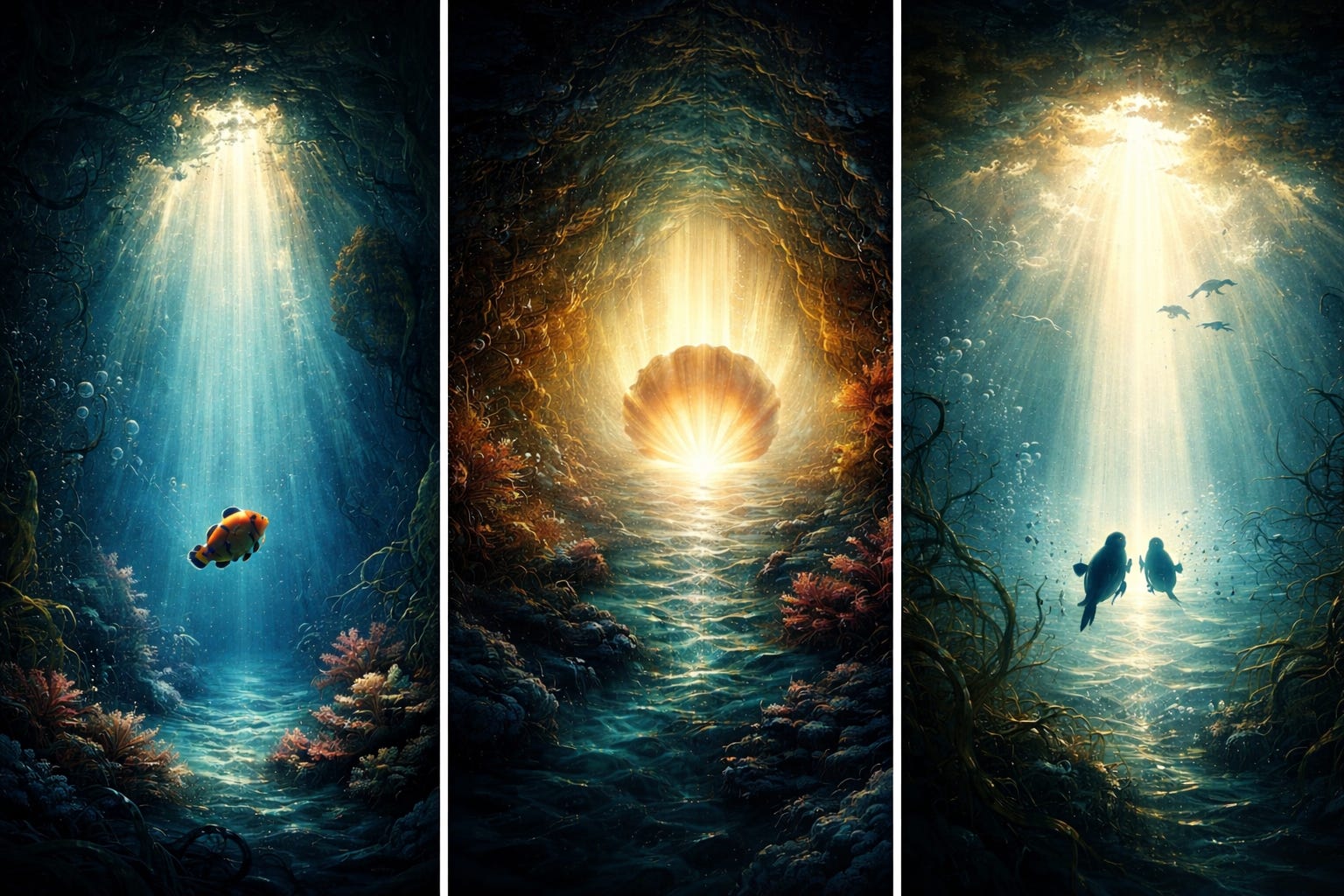
It poses as a gentle rescue narrative, but what it keeps returning to, with a patience that feels almost ancient, is order. Not moral order, not who deserves what, but the kind of order that governs ecosystems, households, bloodlines, and inner worlds. The ocean in this film is not scenery. It is structure. It does not negotiate. It does not flatter. It responds to alignment, and it responds to it the same way every time.
The opening does not ask you to pick a side. There is no villain to hate, no tidy lesson offered to make the scene digestible. A predator enters the reef. Life tightens. Something is taken. Something remains.
We call it tragedy because we want the world to be personal, and because we need to believe suffering has a character we can blame. The sea does not offer that luxury. It offers consequence. It offers reality. It offers the unromantic truth that existence alone is enough to be contested.
Protection is never absolute.
Survival always costs something.
And what survives will be shaped by what it cost.
The Remnant Child
Nemo survives because he is the remnant.
There is a particular weight carried by survivors, especially in families where loss has marked the air itself. The survivor becomes more than a child. The survivor becomes meaning. The survivor becomes proof that what happened did not finish the line. And when a child becomes proof, they often stop being raised and start being managed.
This is how reverence turns into restriction without anyone announcing it.
The reef becomes sacred ground.
The anemone becomes a border.
The father becomes a guard.
Nemo’s fin is not the deepest part of the story, though it is the easiest part to name. The fin becomes a visible rationale, a way to justify what is already happening beneath the surface: the shaping of a life around fear that cannot admit it is fear. “Careful” becomes his name. “Stay close” becomes the family language. “I’m only trying to protect you” becomes a doctrine that sounds like love because it is love, and because love can still be distorted when it is governed by terror.
This is one of the quiet laws of inheritance: what is unresolved in one generation does not disappear, it reorganizes the next.
Biology and the Truth Pixar Leaves Half-Said
Clownfish biology is not a fun fact here. It is the spine.
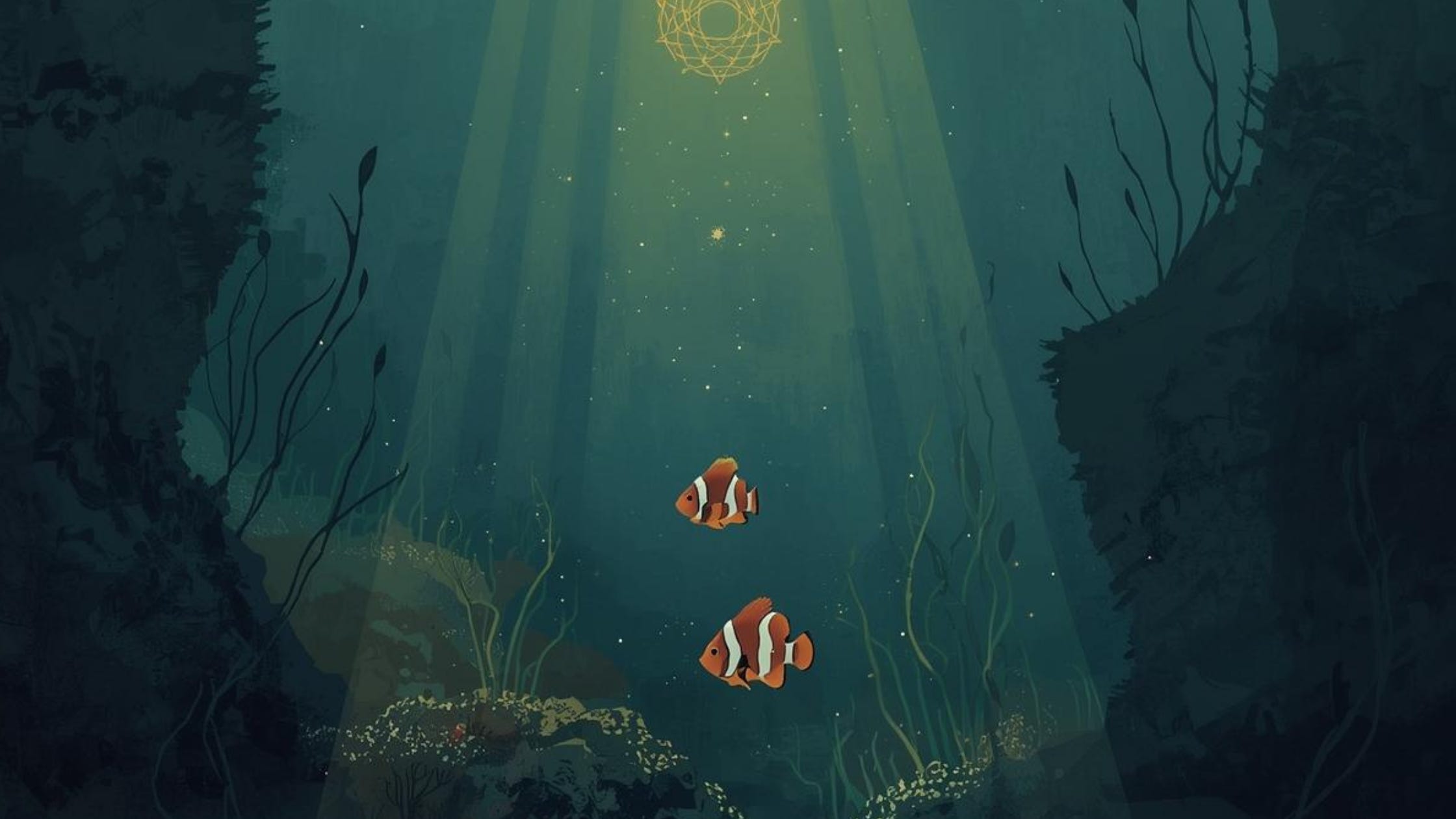
Anemonefish live in small groups close to a host anemone, and their social structure is not casual. The largest fish is the breeding female. The second largest is the breeding male. The smaller ones are held in a suppressed state until the hierarchy shifts. If the female is removed, the breeding male transitions into a female, and the next largest subordinate rises to become the breeding male. That is not metaphor. That is the species’ design for continuity.
This is the first place the film becomes heavier than it looks. Because even if Pixar does not follow the full biological sequence on-screen, the ecosystem still haunts the narrative. These fish are built for proximity. They are built for staying close, for defending a small territory, for living inside boundaries that keep them alive.
And in that reality, Marlin’s impulse makes sense.
Male clownfish commonly take on the day-to-day work of egg care, fanning the eggs to circulate oxygen, cleaning them, removing threats, doing the meticulous, repetitive labor of keeping life from failing at the earliest stage.
So when Coral is gone and only Nemo remains, Marlin becomes a living posture of vigilance. Not because he is weak. Not because he is petty. Because his entire body has been trained by nature to believe the home is the strategy, and that closeness is how you keep the line alive.
Instinct is not the problem.
The problem is what fear does to instinct when fear is allowed to become permanent.
Nature adapts when conditions change. Fear preserves old conditions even after they are gone, then calls the preservation wisdom, then calls the wisdom love, then dares anyone to question it without sounding ungrateful. That is how distortion enters quietly, without horns, without drama, without anybody waking up and deciding to become controlling.
Unprocessed pain rarely stays personal. It becomes policy.
Ancestral Fear as a Form of Governance
Fear does not stay with the one who first felt it. It travels.
Sometimes it travels as silence. Sometimes it travels as rules. Sometimes it travels as a tone in the room that makes the child learn caution before they learn language. By the time fear reaches the next generation, it often does not feel like fear anymore. It feels like common sense. It feels like “this is how our family survives.” It feels like a parent’s steady hand on a child’s shoulder, steering them away from anything that might require the parent to face their own unresolved grief.
“Stay close.”
“You don’t know what’s out there.”
I do not read those lines as villainy. I read them as inheritance.
This is the kind of protection that means well and still becomes oppressive, because it is built on the belief that safety is the highest good, even when safety begins to demand a smaller life than the soul can hold.
And the soul, eventually, resists.
The Boat as Threshold
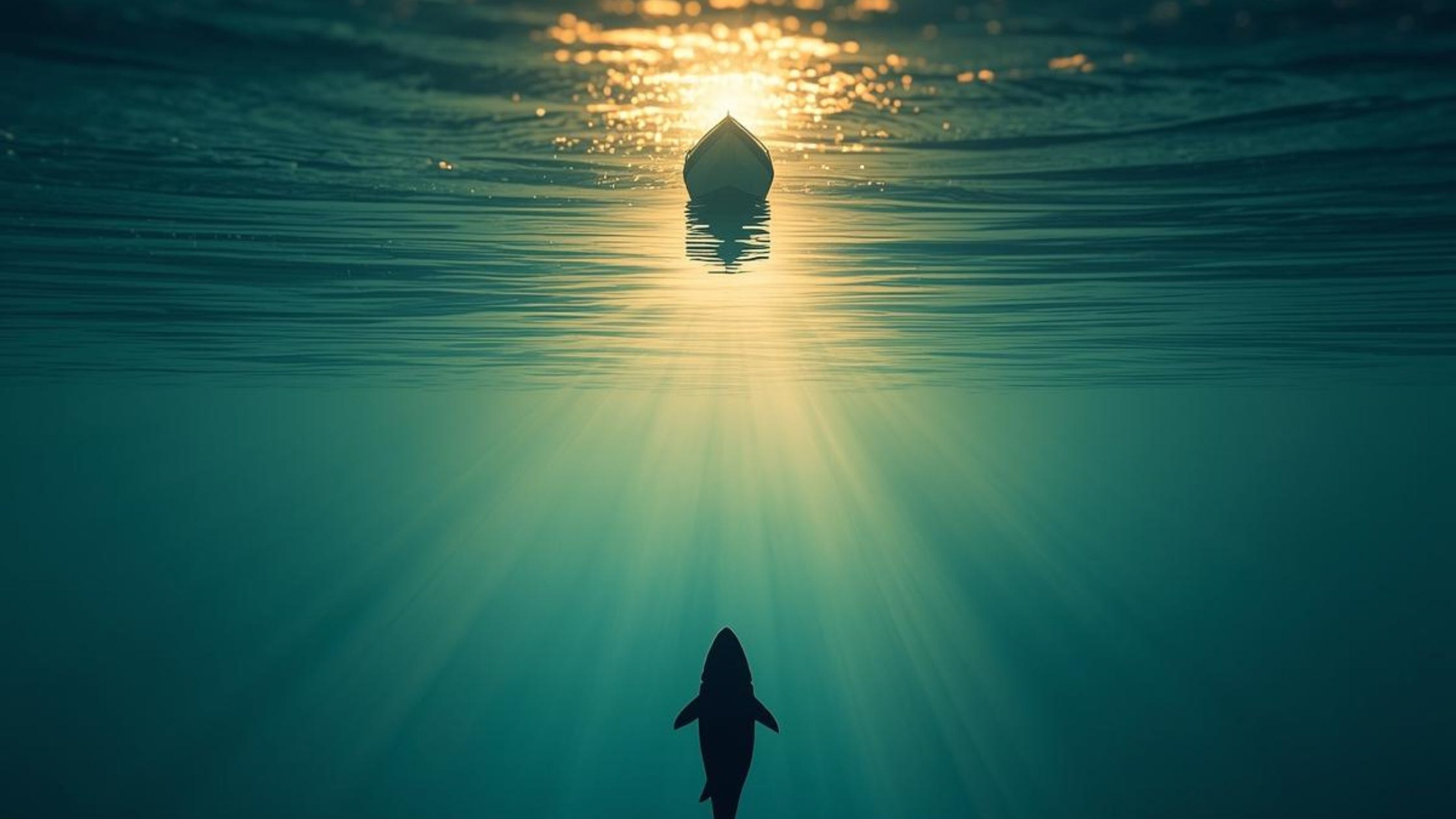
Nemo touching the boat is not simply a child showing off. It is the first visible moment where his inner authority tries to breathe.
When a child has been narrated into fragility, their first attempt at self-definition often looks like disobedience. It is not always wise. It is not always clean. It is often impulsive because the child does not yet have language for what they are reaching for. They only know they cannot keep living inside someone else’s fear.
The ocean answers immediately.
Not as punishment. As information.
Exposure is not cruelty. It is clarity. It reveals what is true about a system, what is true about a body, what is true about a belief. Nemo learns in moments what Marlin has been trying to avoid admitting: the reef can be safe and still be insufficient.
The reef was safe.
It was not sufficient.
Captivity as Curriculum
The tank is not a pause in Nemo’s story. It is an initiation.
In the reef, Nemo is handled like a precious object. In the tank, Nemo is treated like someone whose presence matters, someone who must participate, someone whose choices will affect others. Responsibility has a way of clarifying identity. Not the kind of responsibility that crushes, but the kind that forces you to become coherent.
The system calls the tank “care.” The fish experience it as confinement.
That difference is not a minor detail. It is one of the central tensions of the world we live in. Systems rarely name themselves honestly. Control tends to borrow benevolent language. Captivity is called keeping. Restriction is called safety. The story does not need to shout this to show it. It simply lets the fish speak in the tone of those who know they are being watched, fed, and owned.
Nemo learns strategy in captivity. Not because captivity is good, but because pressure reveals capacity.
Dory and the Intelligence of Discernment
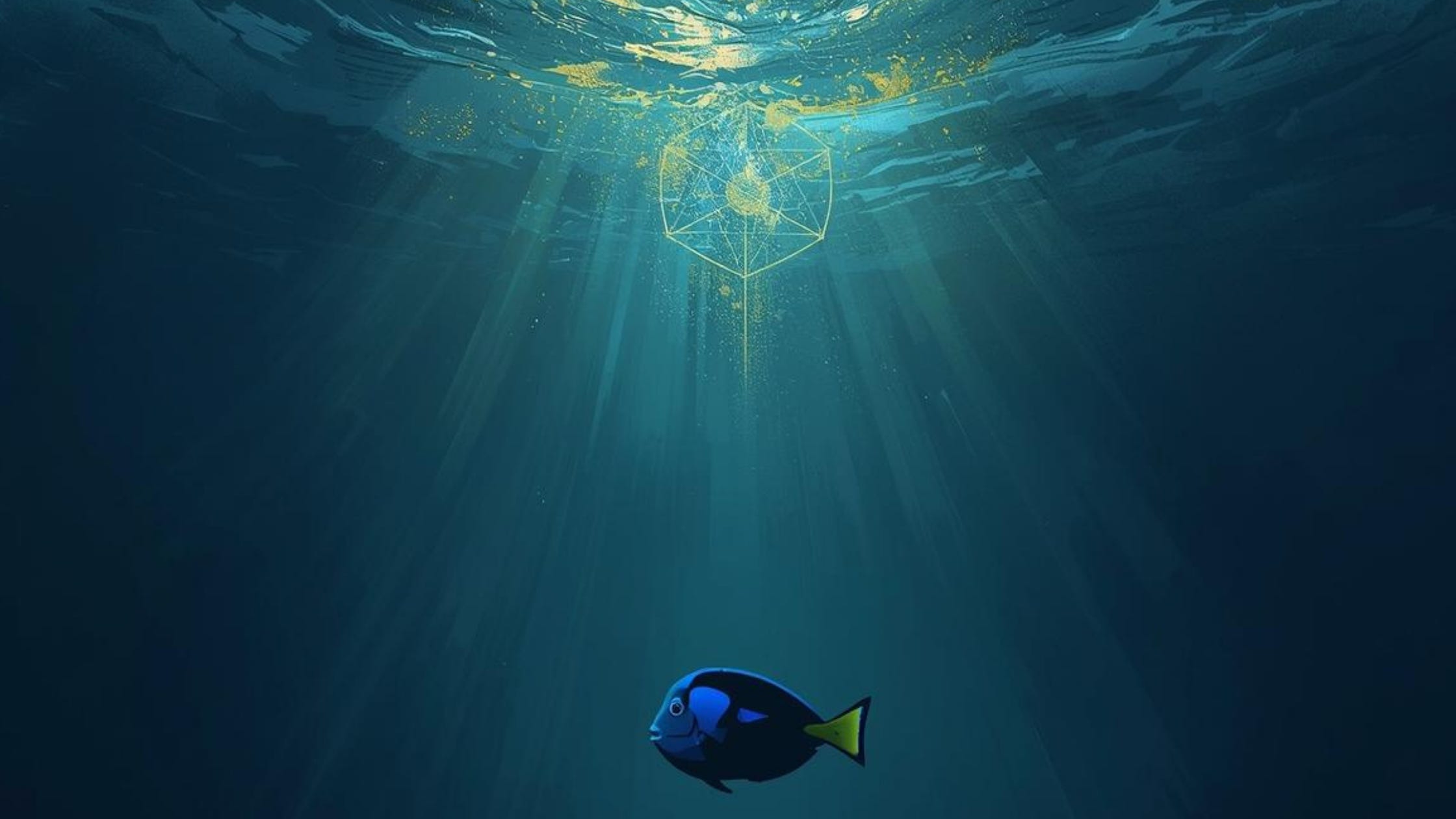
Dory is often treated like comic relief, which is convenient because it prevents people from taking her seriously. She is not merely forgetful. She is responsive. Dory moves through the ocean without worshiping certainty, which is why she can keep moving at all. She forgets details and holds direction. She drops names and retains meaning. She does not need the whole map in order to take the next step.
There is a kind of intelligence that cannot be managed by control-oriented minds because it does not submit to prediction. It frustrates people who require guarantees before they will act. It looks irresponsible from the outside, and then, quietly, it keeps surviving.
Marlin does not make it across the ocean by becoming more controlling. He makes it by being slowly stripped of the belief that control is what love must look like.
The Edge of Protection
Marlin does not lose Nemo because he failed to protect him.
He loses Nemo because protection, when preserved beyond its purpose, becomes obstruction.
There is a moment where vigilance stops serving life and starts restricting it, where care becomes rigid, where authority forgets it was meant to be temporary.
That moment arrives in the net.
Control reaches the edge of its usefulness. What remains is not a choice, but a correction.
“Let go is not emotional advice.
It is biological correction.
When control outlives its function,
it becomes a threat to the species.”
Why the Fear Makes Sense and Why It Still Had to Break
Clownfish live by structure. Their hierarchy is a survival mechanism, not a personality trait. The anemone is not just a home, it is defense, boundary, and strategy. In that world, proximity keeps you alive.
Their social order is also adaptive. If the dominant female is lost, the breeding male transitions into the breeding female, and the group reorganizes so reproduction and continuity remain possible.
This is what fear resists.
Biology does not cling to a role out of loyalty. It releases roles when conditions change. It reorganizes when reality shifts. It does not preserve a strategy past its season simply because the old season hurt.
Fear does the opposite. It preserves the old season. It builds a life around it. It calls that life responsible. Then it calls it love.
Release and the Transfer of Authority
The climax of Finding Nemo is not reunion. It is release.
Marlin’s transformation is not about becoming braver in the way stories usually mean brave. It is about relinquishing the illusion that love must control in order to protect. It is about the humility of admitting that the child cannot become whole while being kept small enough to soothe the parent.
When Marlin lets go, Nemo leads.
That is not sentimental. That is structural. Authority moves to where alignment is.
Healthy power knows when to step back. It does not need to dominate in order to remain relevant. It does not confuse stewardship with possession. It does not call fear wisdom simply because fear once prevented pain.
The Open Sea, after Encanto
Encanto, posted before this, is the house version of this same pattern. The family as an enclosed system where inherited fear becomes architecture and everyone learns to call the pressure a gift. Nemo takes that same inheritance and places it in the open sea, where the lie cannot be sustained because reality is too honest to cooperate.
The ocean does not care how justified your fear feels.
It responds to what is true. It forces you to move.
The sea in this film is not cruel. It is accurate.
Nemo was never weak. He was untested.
Marlin was never evil. He was afraid, and fear had begun to wear the clothing of care.
Sovereignty, as I mean it, is not independence or defiance for its own sake. It is the restoration of right relationship, with the self, with truth, with the past we inherited, and with the reality we cannot control.
Some losses cannot be reversed. Some threats cannot be prevented. Some children cannot be kept inside the anemone forever, even when you love them with your whole body.
The question is not whether we will face the ocean.
The question is whether we will keep calling fear wisdom when the season has already changed.
And whether we will recognize the moment when love, finally, must release.
Reflection
Where in your life has safety been mistaken for alignment?
And what instinct, once necessary for survival, have you continued to obey long after its season passed?
If You’re New Here
The ideas in Kingdom Codes connect to a larger body of work I call the Sovereignty Framework, which examines identity, adversity, and spiritual order as matters of alignment rather than morality.
This work is written from a perspective concerned with discernment more than diagnosis. It pays attention to how instinct, inheritance, and fear shape our inner governance long before conflict appears, and how sovereignty is restored through clarity, not control.
Next Issue Preview
Finding Dory: Agency within nature. Intuition shaped by uncertainty.
This next phase of Kingdom Codes flows deeper into the open sea, where instinct is tested, memory loosens its grip, and sovereignty is no longer negotiated through permission, but revealed through movement.
Nature.
Intuition.
Ancestry.
What survives when control is no longer possible.